


Numberzilla: Number Match Game
4.312.98K Reviews
App Specs
- Version
- 7.7.0.0
- Updated On
- License
- Free
- Downloads
- 10,000,000+
- Developer
- Appsyoulove
- Categories
- Board
- Platform
- Android, iOS
Screenshots




 Analysis by AppCompare
If you're anything like me, you're always on the hunt for a game that can keep your brain sharp while also providing a bit of fun. Well, let me introduce you to Numberzilla: Number Match Game. This little app has been quite the companion on my daily commutes and lazy Sunday mornings.
Getting a feel for the number puzzle
For a first-time player, the appeal is easy to understand: you scan a board, look for a legal pair, and try to make a little more room. The simple premise gives you a quick way into a round, but the board can become harder to read as numbers accumulate. I’d approach the first session as a chance to learn the matching rhythm rather than a test of speed or arithmetic talent.
Numberzilla is a free board game from Appsyoulove, with a 4.3 average from around 188,000 ratings and more than 10 million installs. It is rated for Everyone, so its number-based play is suitable for a broad audience. The game has been available since October 2019, and version 7.5.0.0 supports devices running Android 8.0 or later. It also offers optional in-app purchases, listed at prices from $0.99 to $59.99 per item, so I’d check the purchase details before spending.
A useful way to decide whether it suits you is to think about the kind of puzzle you want. This is not a crossword that depends on vocabulary, and it is not Sudoku, where you fill a grid by applying row, column, and box rules. Numberzilla’s central task is to notice pairs on a changing board. If you enjoy visual searching and small, deliberate decisions, that difference is a strength. If you want a long chain of mathematical problems or a story-driven campaign, you may find the central loop too narrow.
What is Numberzilla all about?
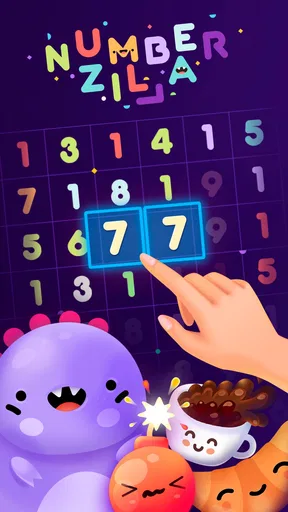
At its core, Numberzilla is a number puzzle game, and it’s as addictive as they come. Imagine a mash-up of Sudoku and a classic match-3 game, but with numbers. The main goal is to clear the board by matching numbers. It sounds simple, right? But trust me, it gets delightfully challenging.
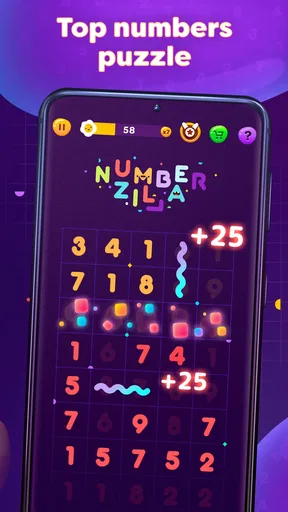
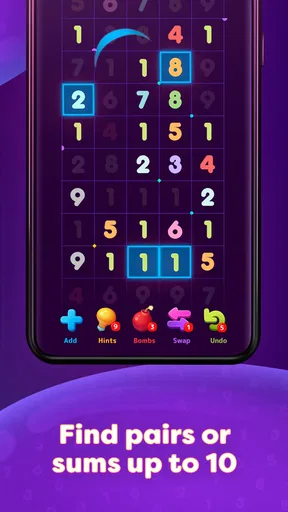
The gameplay is straightforward: you have to find and match pairs of numbers that add up to 10 or identical numbers that are placed side by side. The board can get pretty crowded with numbers, so strategic thinking is key. It’s like Tetris, but for math lovers.
Features that caught my eye
First off, the interface is clean and user-friendly. I love how the developers have kept distractions to a minimum. The background music is soothing without being intrusive, which makes it perfect for zoning out and focusing on the numbers.
Worth Reading Before You Choose

EA SPORTS FC Mobile 26 Is a Bigger Football Game, but It Takes Time

Flipboard Shows What News Apps Must Do Beyond the Feed

Switching to Android Auto Means Rethinking Your Driving Routine

Google Calendar Makes a Crowded Week Easier to Manage

Ludo King Makes the Most of the Minutes Between Plans

Baby Panda World Brings Quick Play to Modern Phones, but Its Game Library Feels Busy
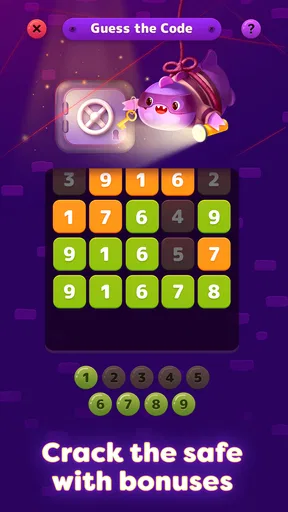
One of the game’s highlights is its variety of modes. Whether you’re a casual player or someone who thrives on challenges, there’s something for everyone. The Classic mode is perfect for unwinding, while the Survival mode adds a thrilling layer of pressure as you race against time.
Another feature worth mentioning is the daily challenges. These keep the game fresh and engaging. Plus, there’s nothing like the satisfaction of completing a daily puzzle to keep you coming back for more.
Why I keep playing
Honestly, it’s the perfect blend of relaxation and challenge. I’ve spent countless hours trying to beat my high scores, and the sense of achievement when you clear a particularly tricky board is unmatched. It’s a game that doesn’t just pass the time but also feels like a mental workout.
The app also offers a hint system, which I’ve found super helpful when I’m stuck. It’s not too hand-holding, just enough to nudge you in the right direction without giving away the whole game.
A reassuring first session
When I start a new number puzzle, I try to make the first few moves slowly enough to understand what the board is asking me to notice. Here, that means checking for equal numbers as well as pairs that total ten, and paying attention to whether the candidates are adjacent in the permitted layout. The first satisfying success is often not clearing a large section; it is spotting one valid pair without rushing, then seeing how that removal changes the next choice.
That small pause is practical, not fussy. It prevents the common beginner mistake of tapping numbers simply because they look promising, then losing track of the board. I also avoid treating every available pair as equally useful. If several matches are visible, I consider which one opens up more of the crowded area or leaves a clearer next move. The game rewards observation more than fast calculation, so a calm scan is a better starting habit than trying to race.
A realistic use is a short break between errands or during a commute when you have a few minutes and want something more engaging than scrolling. I can play a little, put the phone away when I arrive, and return later without needing to remember a complicated plot. For a longer quiet spell, the daily challenge gives the session a defined target, while the more relaxed approach suits someone who simply wants to work through the board at their own pace.
Common snags and useful habits
The rule about which numbers can be paired can take a moment to settle in. Matching values alone is not always enough: the pair also has to meet the game’s placement condition. When a move does not work, I’d check both the arithmetic and the position before assuming the game has missed a valid match. That simple double-check makes the board feel less arbitrary and helps you learn its logic more quickly.
Another easy trap is to focus only on the most obvious visible pair. Clearing it may feel productive, but it does not necessarily leave the board in a better state. I try to look across the available numbers before each move, especially once the rows become dense. This is one of the more useful ways to improve without relying on hints: pause, identify a couple of possible matches, and choose the one that seems likely to make the next scan easier.
Hints are handy when I’m genuinely stuck, but I wouldn’t use them as the default way to play. If I ask for help too quickly, I lose the chance to notice why a pair was available. A better routine is to scan once from the beginning of the board, then again in the opposite direction, and use a hint only if I still cannot find a move. That keeps the assistance useful rather than turning the puzzle into a sequence of prompts.
The game’s modes also suit different moods, but they are not interchangeable. Classic is the gentler choice when I want to take my time; Survival, with its time pressure, is better when I’m in the mood for a brisker challenge. If a rushed round makes me tense rather than entertained, I switch back instead of treating the timer as something I have to master. The daily challenge can be a satisfying routine, but it may not be the right choice when I only want an unstructured couple of minutes.
How it fits beside other puzzle games
Compared with Sudoku, this game asks for quick pattern recognition rather than careful number placement across a fixed grid. Compared with match-three games, it is less about building combinations through repeated swaps and more about reading the relationships between the numbers already on the board. That makes it a distinctive choice for people who like compact logic puzzles, though it may feel repetitive to anyone who needs new mechanics or a changing set of objectives every few minutes.
I’d choose it over a word puzzle when I want to play without leaning on spelling or general knowledge, and over a demanding strategy game when I want a lighter commitment. On the other hand, a traditional Sudoku app is likely a better fit if I want a stricter logical challenge with a clearly defined grid, while a multiplayer board game is the better option when playing with friends is the main point. Numberzilla is primarily for individual puzzle-solving, not social competition.
It is also worth being realistic about attention. The board invites concentration, and the game is less suitable when you need to watch your surroundings or respond immediately to something else. I would not use a timed mode while walking through a busy area or in any situation where the screen could distract me. For a stationary break, though, the simple rules make it easy to get started without a lengthy learning period.
Room for improvement
While I’m a big fan, no app is perfect. Sometimes the ads can be a bit overwhelming, especially after completing a level. However, there’s an option to remove them with an in-app purchase, which is a worthwhile investment if you’re planning to play often.
Also, I’d love to see a multiplayer feature in the future. Competing against friends or family could add a fun dimension to the game.
The free-to-play setup makes it easy to try the core experience before deciding whether it belongs on your phone, but the purchase range is broad enough that I would not tap through a payment screen casually. If an offer appears, I’d read exactly what it includes and consider how often I play before buying. Ads can interrupt the flow, which matters more in a short session than during a longer one; that friction is a genuine trade-off rather than something the puzzle itself solves.
For that reason, I see it as a good fit for someone who enjoys solo number puzzles, wants a low-barrier game for spare moments, and is happy to repeat a familiar core activity. I’d suggest skipping it if you dislike ads, strongly prefer multiplayer, or want every session to introduce a new mechanic. It is also not the best pick if number matching feels like work rather than a relaxing change of pace. Those preferences matter more than whether you consider yourself “good at math,” because the satisfying part is spotting patterns, not doing difficult calculations.
The final verdict
All in all, Numberzilla: Number Match Game is a fantastic app for anyone who enjoys puzzle games. It’s challenging enough to keep you engaged but simple enough that you can pick it up anytime. Whether you’re a numbers whiz or just someone looking for a new way to pass the time, I’d say give it a shot. Just be warned: you might find yourself a little obsessed!
So, why not give it a try? You can find Numberzilla on both Android and iOS, ready for download. Happy matching!
My practical recommendation is to begin with a relaxed round, learn how the pair rule works on the board, and save the timed mode for when you actively want pressure. If you enjoy that first clear and find yourself scanning for the next pair rather than wishing the game would change its rules, it is probably a good match for your downtime. If you do not, there are plenty of other puzzle styles that may suit you better, and there is no need to force a number game into your routine.
Pros
- Engaging puzzle challenges.
- Simple and intuitive interface.
- Boosts mental arithmetic skills.
- Frequent updates with new levels.
- Minimal ads for free users.
Cons
- Limited hints available.
- Repetitive after extended play.
- No multiplayer mode.
- In-app purchases can be pricey.
- May drain battery quickly.
FAQs for Numberzilla: Number Match Game
What is Numberzilla: Number Match Game?
Numberzilla: Number Match Game is a brain-training puzzle game that challenges players to clear a board of numbers by matching pairs that add up to a specific target. It combines elements of number logic and strategic thinking, providing an engaging way to improve your cognitive skills on both Android and iOS devices.
How do you play Numberzilla?
In Numberzilla, players must find and match pairs of numbers that add up to the target number, usually 10. These numbers can be adjacent or separated by other numbers. The goal is to clear the board completely by strategically removing pairs, making it a game of both skill and patience.
Is Numberzilla free to download and play?
Yes, Numberzilla is free to download from both the Google Play Store and the Apple App Store. However, it may contain in-app purchases and ads that can enhance the gaming experience or remove ads, depending on the user's preference. Always check the app details before downloading.
What are the benefits of playing Numberzilla?
Playing Numberzilla can enhance your cognitive abilities, such as memory, concentration, and problem-solving skills. It's an excellent way to keep your mind sharp while enjoying a relaxing yet challenging game. Additionally, the game offers a variety of difficulty levels to suit different skill levels.
Does Numberzilla require an internet connection?
Numberzilla can be played offline, making it a convenient option for users who want to enjoy the game without needing an internet connection. However, some features, like leaderboard access or updates, may require connectivity. Always check app permissions and requirements before playing.


